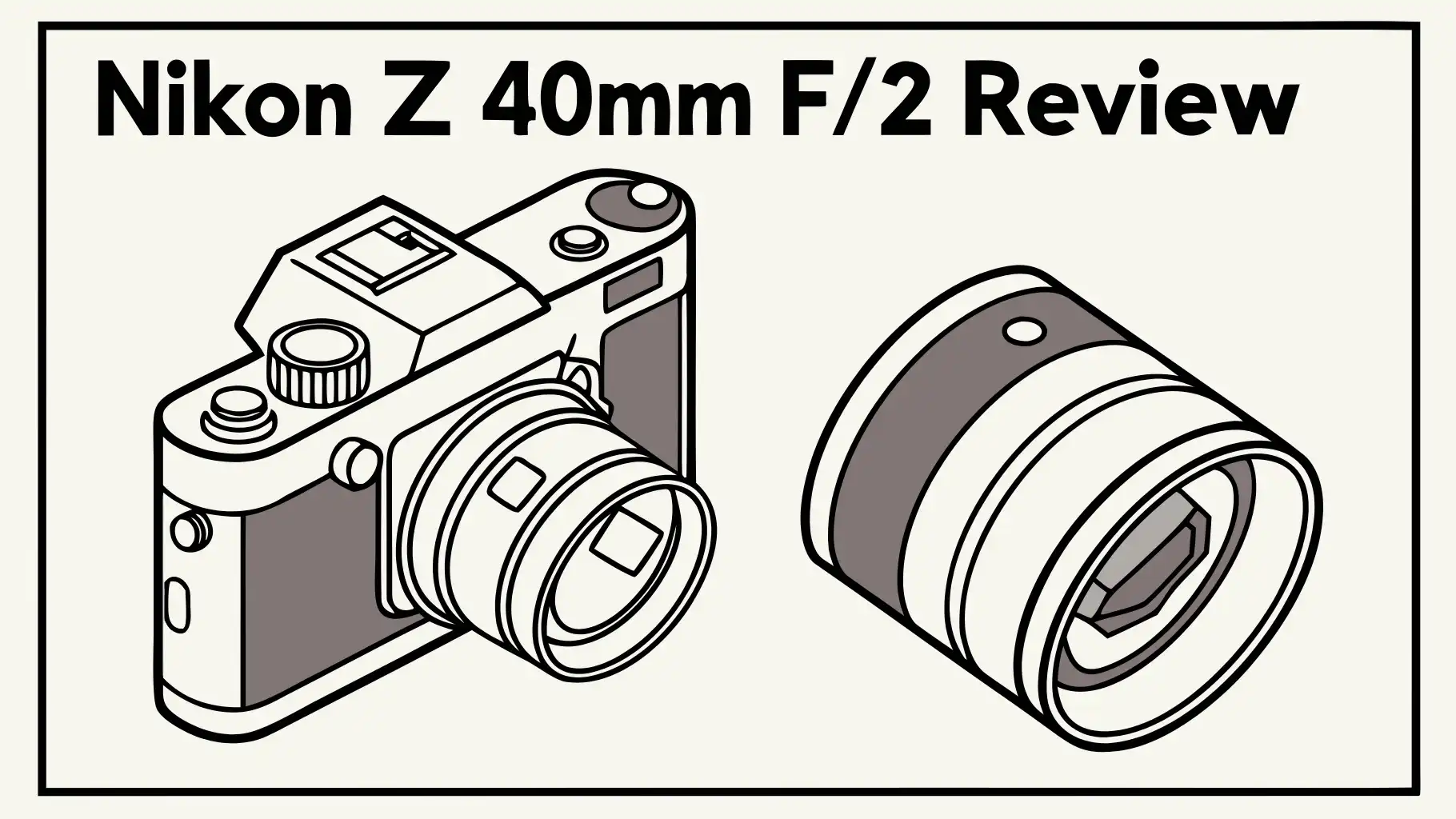
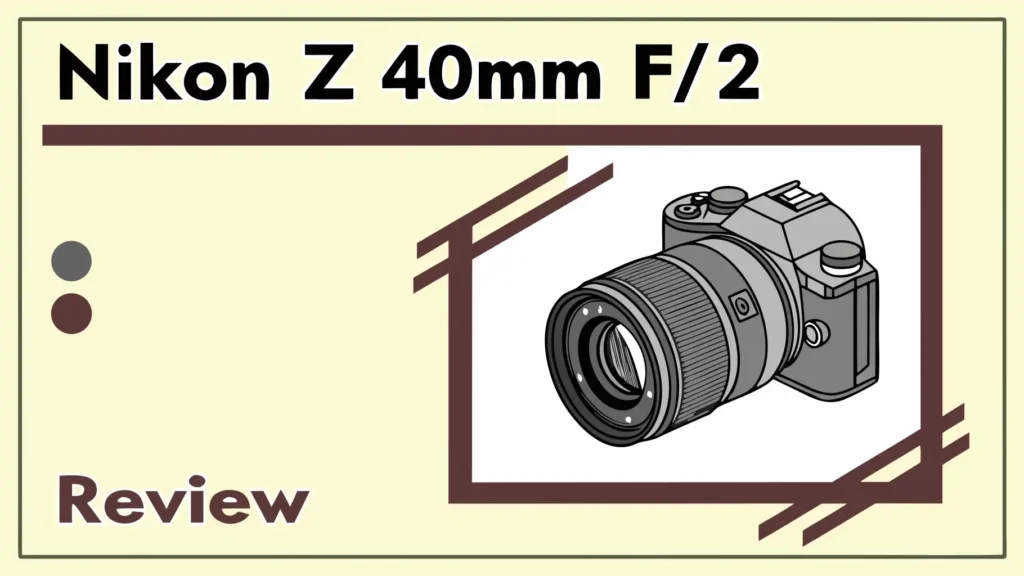
Nikon Z 40mm f/2 Review: Is It Worth Trying?
Looking for a lightweight prime lens that delivers stunning image quality without breaking the bank? The Nikon Z 40mm f/2 might be exactly what your camera bag needs.
This compact powerhouse has taken the photography community by storm since its release. It offers incredible value for both beginners and professionals alike.
In this detailed review, we’ll explore everything about this remarkable lens. You’ll discover its strengths, understand its limitations, and learn whether it deserves a spot in your camera bag.
Key Takeaways
- Incredibly Portable Design: At just 170 grams and 45.5mm in length, this lens is one of the most compact full-frame primes available for Nikon Z mount cameras. You can carry it all day without shoulder fatigue.
- Outstanding Value for Money: Priced at approximately $196 to $296, this lens offers exceptional optical performance at a fraction of the cost of S-line lenses. It’s perfect for photographers on a budget who refuse to compromise on quality.
- Versatile Focal Length: The 40mm focal length sits perfectly between 35mm and 50mm. This makes it ideal for street photography, environmental portraits, travel, and everyday shooting. It’s wide enough for context yet tight enough for subject isolation.
- Fast f/2 Maximum Aperture: The bright f/2 aperture enables beautiful background blur and excellent low-light performance. You can shoot handheld in challenging lighting conditions without cranking up your ISO.
- Near-Silent Autofocus Performance: The stepping motor delivers quick, accurate, and virtually silent focusing. This makes it perfect for video work, street photography, and situations where discretion matters.
- Close Focusing Capability: With a minimum focusing distance of 0.4 meters, you can get surprisingly close to your subjects. This opens up possibilities for creative composition and detail shots.
Understanding the Nikon Z 40mm f/2

- Camera compatibility: Compatible with FX and DX format Nikon Z series mirrorless (on DX-format cameras, the lens has a...
- Fast & quiet Autofocus: AF System greatly suppresses focus breathing to prevent angle-of-view shifts during recording:...
The Nikon Z 40mm f/2 represents a new category of lenses in Nikon’s mirrorless lineup. It’s not an S-line lens. This means it doesn’t carry the premium designation. However, don’t let that fool you. This lens punches well above its weight class.
Nikon designed this lens with a specific philosophy in mind. They wanted to create something truly portable. Something photographers would actually want to carry everywhere. Traditional 50mm f/1.8 lenses are great. But they’re often too long and heavy for casual shooting. The 35mm f/1.8 S is fantastic. But its price point puts it out of reach for many users.
The 40mm f/2 fills this gap perfectly. It offers a sweet spot focal length that works for most situations. The construction uses high-quality plastics. This keeps the weight down dramatically. The metal mount ensures durability where it matters most.
The optical formula consists of nine elements in six groups. This includes two aspherical elements. These elements help minimize distortion and aberrations. The seven-blade aperture diaphragm creates pleasant bokeh. The Super Integrated Coating reduces flare and ghosting effectively.
This lens feels right at home on any Nikon Z body. It balances particularly well on the Z5, Z6, and Z7 series cameras. Even on the compact Zfc, it creates a beautifully proportioned setup. The lens doesn’t dominate the camera. Instead, it becomes an almost invisible extension of your creative vision.
Build Quality and Design Philosophy
The Nikon Z 40mm f/2 showcases thoughtful engineering throughout its construction. When you first hold this lens, you notice its reassuring solidity despite the lightweight build. The exterior features a matte finish that resists fingerprints well. The texture provides excellent grip even in damp conditions.
The focus ring operates smoothly with just the right amount of resistance. There’s no traditional distance scale. This is typical for modern autofocus lenses. The ring moves electronically rather than mechanically. This design choice enables focus-by-wire operation. It also contributes to the weather-sealed construction.
Speaking of weather sealing, the lens includes a gasket at the mount. This provides protection against dust and moisture. While it’s not rated for extreme conditions like S-line lenses, it handles light rain and dusty environments admirably. The front element has a fluorine coating that repels water and makes cleaning easier.
The included lens hood reverses for compact storage. It’s a simple plastic design. But it does the job effectively. The hood features a bayonet mount. This ensures it stays secure during shooting. Some photographers wish for a metal hood. However, that would add unnecessary weight and cost.
Button and switch placement is minimal by design. There’s no focus limiter. There’s no image stabilization switch. This isn’t an oversight. The lens relies on in-body stabilization. The simplicity means fewer things to break. It also contributes to the clean, minimalist aesthetic that many photographers appreciate.
Image Quality Performance
The optical performance of the Nikon Z 40mm f/2 impresses across most shooting scenarios. The center sharpness at f/2 is very good. It’s immediately usable for professional work. Stop down to f/2.8, and sharpness improves noticeably. The contrast increases significantly at this aperture.
Peak sharpness arrives between f/4 and f/8. At these apertures, the lens delivers excellent results across the entire frame. Corner sharpness, while not quite matching the center, remains very good. This consistency makes the lens reliable for landscape photography and architectural work.
Wide open at f/2, you’ll notice slightly softer corners and reduced contrast. This isn’t unusual for affordable prime lenses. The good news? These characteristics often enhance portrait photography. The gentle focus fall-off creates a flattering look. Your subjects pop beautifully against softly rendered backgrounds.
Chromatic aberration control is impressive. You’ll see minimal color fringing even in high-contrast situations. Nikon’s in-camera corrections handle any residual aberrations effectively. Lightroom and other RAW processors also include built-in profiles. This means you rarely need to worry about purple or green fringing.
Distortion is minimal and well-controlled. The lens shows very slight barrel distortion. It’s so minor that most photographers won’t notice it. For critical applications, lens corrections in post-processing eliminate it completely. The aspherical elements do their job effectively.
Vignetting at f/2 is noticeable but not excessive. You’ll see some light fall-off in the corners when shooting wide open. Stopping down to f/2.8 reduces it significantly. By f/4, vignetting becomes negligible. Many photographers actually appreciate some vignetting. It draws attention naturally toward the center of the frame.
Top 3 Alternatives for Nikon Z 40mm f/2

- Fast 50mm prime for Z Mirrorless cameras
- Uncanny f/1.8 performance, extreme sharpness and virtually zero distortion

- Fast 35mm prime Lens for Z Mirrorless cameras
- Uncanny f/1.8 performance-extreme sharpness from the center of the frame to the edges

- Camera compatibility: Full frame fast 40mm prime Lens for Z Mirrorless cameras
- Fast & quiet Autofocus: AF System greatly suppresses focus breathing to prevent angle-of-view shifts during recording.
Autofocus Speed and Accuracy
The autofocus system in the Nikon Z 40mm f/2 performs admirably for most shooting situations. The stepping motor delivers quick, decisive focus acquisition. In good light, the lens snaps to focus almost instantaneously. You won’t miss moments due to sluggish autofocus performance.
Low-light focusing capability is solid. The f/2 maximum aperture provides enough light for the camera’s autofocus system. You can shoot confidently in dimly lit restaurants, evening streets, and indoor venues. The lens works effectively down to about -4 EV. This matches most modern Nikon Z bodies.
The near-silent operation is a standout feature. You barely hear any noise during focusing. This makes the lens perfect for video work. It’s also ideal for street photography where discretion matters. Wedding and event photographers appreciate the quiet operation during ceremonies.
Focus accuracy is excellent with modern Z cameras. The combination of phase-detection autofocus and face/eye detection works beautifully. When shooting portraits, the lens locks onto eyes reliably. It maintains focus even as subjects move slightly. The hit rate for sharp images is very high.
Manual focus override works smoothly through the focus ring. The electronic focus-by-wire system responds precisely to your inputs. There’s a slight delay compared to mechanical focusing. However, most photographers adapt quickly. The magnification assist feature in Z cameras makes precise manual focusing easy when needed.
For action photography, the lens keeps up reasonably well. It’s not designed for fast-moving sports. However, it handles walking subjects and moderate motion effectively. The continuous autofocus tracking works better than you might expect from an affordable prime lens.
Low Light and Bokeh Characteristics
The f/2 maximum aperture makes this lens a capable performer when light levels drop. You gain approximately two stops over typical kit zoom lenses. This means you can shoot at ISO 800 instead of ISO 3200. The result is cleaner images with less noise and better dynamic range.
For available light photography, this lens shines beautifully. Coffee shop portraits look natural and intimate. Evening street scenes capture the atmosphere without excessive grain. Indoor events become more manageable without flash. The lens gives you creative freedom in challenging lighting conditions.
The bokeh quality is pleasant and smooth at f/2. Out-of-focus areas render naturally without harsh edges. The seven-blade aperture creates nicely rounded highlights. They’re not perfectly circular due to the blade count. However, they remain attractive and undistracting in most situations.
Background separation is very good for the focal length. At f/2, you can isolate subjects effectively when shooting portraits. The 40mm focal length provides enough compression for pleasing perspective. Yet it’s wide enough to include environmental context when desired. This versatility makes the lens incredibly practical.
Bokeh balls show slight outlining at f/2. This is typical for lenses at this price point. Stop down to f/2.8, and they become rounder and more refined. By f/4, the aperture blades become more visible in the highlights. Most photographers won’t find this objectionable. The overall bokeh character remains smooth and organic.
Foreground blur handles well too. When you focus close to your subject, elements in front blur attractively. This creates a sense of depth and dimension in your images. The lens doesn’t produce harsh or nervous bokeh patterns. Everything feels natural and film-like.
Street Photography Applications
The Nikon Z 40mm f/2 is an exceptional choice for street photography. The compact size doesn’t intimidate subjects. You can shoot discreetly without drawing unwanted attention. The lens makes your camera setup look casual rather than professional. This helps you blend into your environment naturally.
The 40mm focal length works perfectly for street work. It’s wide enough to capture environmental context. You can show relationships between subjects and their surroundings. Yet it’s tight enough to isolate interesting characters and moments. You don’t need to get uncomfortably close to fill the frame.
The fast maximum aperture enables creative storytelling. You can shoot with shallow depth of field to highlight specific subjects. Or stop down for street scenes where you want everything sharp. The flexibility lets you adapt your approach to different situations instantly.
Weight matters tremendously for street photography. Heavy gear causes fatigue. It makes you less likely to bring your camera along. The 170-gram weight of this lens changes the equation completely. You can walk for hours without shoulder strain. Your camera becomes an extension of your eye rather than a burden.
The near-silent autofocus is perfect for candid moments. Loud focusing motors announce your presence. They break the natural flow of scenes. With this lens, you can capture authentic moments without disruption. People don’t notice you’re photographing them until after the shot.
The close focusing distance adds creative possibilities. You can capture interesting details, textures, and small scenes. This variety keeps your street photography portfolio dynamic and engaging. The lens handles both wide establishing shots and intimate detail work equally well.
Portrait Photography Capabilities
While not traditionally considered a portrait lens, the Nikon Z 40mm f/2 excels at environmental portraits. The slightly wider perspective shows subjects in context. You capture their personality along with their surroundings. This storytelling approach creates more engaging portraits than isolated headshots.
The f/2 aperture provides adequate subject separation. Your subjects stand out clearly from backgrounds. The bokeh quality is smooth and flattering. Skin tones render naturally without weird color casts. The lens doesn’t impose a particular look on your images. This neutrality gives you creative freedom in post-processing.
For traditional headshot work, you’ll need to step closer. The 40mm focal length isn’t ideal for tight portraits. It creates slight distortion when you fill the frame with faces. However, for three-quarter length and full-body portraits, the perspective works beautifully. Features remain natural and proportionate.
The lens handles group portraits surprisingly well. You can fit several people in the frame without standing far away. The depth of field at f/2.8 or f/4 keeps faces sharp throughout the group. The compact size makes positioning easier in tight spaces.
Outdoor portrait sessions benefit from the lightweight design. You can shoot for extended periods without fatigue. The weather sealing provides peace of mind near water or in light rain. The fluorine coating on the front element repels water droplets during unexpected weather changes.
Indoor portrait work showcases the lens’s low-light capability. Window light portraits look beautiful and natural. The fast aperture allows you to maintain reasonable shutter speeds. You avoid motion blur while keeping ISO under control. Available light portraits maintain atmosphere that flash often destroys.
Video Recording Performance
The Nikon Z 40mm f/2 proves itself as an excellent video lens for content creators. The near-silent autofocus motor keeps audio tracks clean. You won’t hear focusing noise in your recordings. This is crucial for documentary work and interview setups.
The stepping motor provides smooth focus transitions. During video recording, focus pulls appear natural and cinematic. There are no sudden jumps or hunting behavior. The lens tracks moving subjects smoothly when using continuous autofocus. Your footage looks professional right out of camera.
The 40mm focal length is versatile for video work. It’s wide enough for talking-head videos and vlogging. Yet it provides enough compression for flattering subject rendering. You can shoot interviews, product reviews, behind-the-scenes content, and narrative pieces effectively. The single focal length encourages you to move rather than zoom.
The lightweight design matters for handheld video. Your arms don’t tire quickly during extended recording sessions. Gimbal users appreciate the minimal weight. It reduces strain on motors and extends battery life. The lens balances well on smaller stabilizers designed for mirrorless cameras.
Focus breathing is minimal but present. When focus shifts from near to far, the field of view changes slightly. This is typical for modern autofocus lenses. It’s rarely noticeable in finished videos. However, critical video work might require focus breathing compensation in post-production.
The manual focus ring enables precise control for creative shots. You can execute smooth, deliberate focus pulls for dramatic effect. The electronic focus-by-wire system responds well to gentle inputs. With practice, you can achieve cinema-style focus transitions that enhance your storytelling.
Travel and Everyday Photography
For travel photographers, the Nikon Z 40mm f/2 is nearly perfect. The compact size saves precious space in camera bags. You can pack more gear or travel lighter. Either way, you gain flexibility. The lens doesn’t scream “expensive camera equipment.” This reduces theft risk in unfamiliar locations.
The versatile focal length handles most travel situations. You can photograph architecture, street scenes, portraits of locals, food, and landscapes. You rarely feel limited by the fixed focal length. The exercise of working with one lens sharpens your compositional skills. You learn to see differently.
The fast aperture enables shooting in challenging travel conditions. Dark churches, evening markets, and indoor cultural sites remain accessible. You capture authentic moments without intrusive flash. Your travel images maintain the natural atmosphere that makes them memorable.
Weather sealing provides essential protection while traveling. Unexpected rain showers don’t force you to pack away your camera. Dusty desert environments won’t damage your lens. The fluorine coating makes cleaning easy after adventurous days. You spend less time worrying and more time creating images.
Battery life improves compared to zooms with stabilization. The lens relies on in-body stabilization. It draws less power than optically stabilized zooms. Your camera batteries last longer. This is valuable when you’re away from power outlets for extended periods.
The lens encourages walking and exploration. Heavy telephoto zooms make you lazy. You stand in one spot and zoom in. With this lightweight prime, you naturally move closer or further to frame shots. This physical engagement leads to better compositions and more interesting perspectives.
Landscape and Architecture Use
While not specifically designed for landscape work, the Nikon Z 40mm f/2 performs admirably in this genre. The 40mm focal length offers a unique perspective. It’s wider than standard 50mm lenses. Yet it’s tighter than classic 35mm wide-angles. This creates interesting compositional possibilities.
Sharpness across the frame at f/8 is excellent. When you need front-to-back sharpness in landscape images, this lens delivers. Corner performance matches center performance closely at optimal apertures. Your landscape images remain crisp even when printed large.
The lack of optical stabilization isn’t problematic for landscapes. You’ll typically use a tripod anyway for optimal results. The lightweight design makes carrying a tripod setup more pleasant. Your total gear weight decreases significantly compared to heavier lenses.
Architectural photography benefits from minimal distortion. Vertical lines remain relatively straight. The slight barrel distortion corrects easily in post-processing. Modern RAW processors apply lens profiles automatically. Your architectural images require minimal correction work.
The close focusing distance enables foreground interest. You can include flowers, rocks, or other elements close to the lens. This creates depth and draws viewers into your landscape compositions. The lens transitions smoothly from near to far elements.
Flare resistance is good but not exceptional. When shooting into the sun, you may see some ghosting. The lens hood helps considerably. However, it’s not as resistant as premium S-line lenses. Plan your compositions to avoid direct sun in frame when possible. Or embrace the flare as a creative element.
Value Proposition and Pricing
At approximately $196 to $296, the Nikon Z 40mm f/2 represents outstanding value. You get a genuine Nikon Z-mount lens with excellent optics. The build quality is solid despite the affordable price. The performance rivals lenses costing significantly more.
Compare this to the Z 50mm f/1.8 S at $466. You’re paying less than half the price. Yes, you sacrifice one stop of aperture and some optical perfection. However, for most photographers, the differences won’t matter in real-world use. The 40mm focal length might even prove more versatile than the 50mm.
The Z 35mm f/1.8 S costs nearly four times as much at $746. It’s undoubtedly a superior lens optically. The build quality is more robust. However, the 40mm delivers 80 percent of the performance at 25 percent of the cost. That math makes sense for many photographers.
Third-party alternatives from Viltrox cost around $168. You save about $30 compared to the Nikon. However, you lose some autofocus reliability and build quality. The Nikon lens integrates better with camera firmware updates. You also get better resale value with the Nikon brand.
Consider the cost per use over the lens’s lifetime. If you paid $196 and use it regularly for five years, that’s about $3 per month. Few purchases in photography offer such sustained value. The lens will likely outlast several camera bodies. It remains relevant regardless of megapixel races and technology changes.
The lens frequently goes on sale or comes bundled with cameras. Watch for deals during major shopping events. Some retailers offer instant rebates. Buying used from reputable dealers can save additional money. The lens is common enough that finding clean used copies is relatively easy.
Limitations and Drawbacks
No lens is perfect, and the Nikon Z 40mm f/2 has some compromises. Understanding these limitations helps set realistic expectations. Most photographers find them acceptable given the price and portability benefits.
The plastic construction feels less premium than S-line lenses. If you’re used to metal barrels and luxury build quality, this lens feels basic. However, the plastics are high-quality engineering grades. They don’t feel cheap or fragile. Just different from premium offerings.
Wide-open sharpness doesn’t match high-end primes. At f/2, the lens shows good but not outstanding sharpness. Contrast is lower than at f/2.8. For critical work, you’ll want to stop down slightly. However, this is typical for affordable fast primes.
The lack of customizable buttons limits some workflows. There’s no programmable function button. You can’t assign specific functions to the lens. Photographers who rely on lens-based controls might miss this feature. However, most users won’t notice the absence.
Bokeh quality, while pleasant, isn’t extraordinary. The seven-blade aperture creates slightly polygonal highlights. Out-of-focus areas are smooth but not creamy. If you’re a bokeh perfectionist, more expensive lenses render backgrounds more beautifully. For most applications, the bokeh is perfectly adequate.
Edge and corner performance at f/2 shows noticeable softness. If you pixel-peep your images, you’ll see this clearly. For normal viewing and printing, it’s rarely an issue. Stop down to f/4, and the problem disappears. The softness actually flatters some portrait subjects.
There’s no distance scale or focus markings. Manual focus purists and video professionals sometimes want physical feedback. The electronic focus-by-wire system doesn’t provide this. You adapt quickly with practice. However, it’s worth noting if you come from older manual focus lenses.
Comparison with Kit Lenses
Understanding how the Nikon Z 40mm f/2 compares to typical kit zooms helps justify the purchase. The lens offers significant advantages that transform your photography experience.
Image quality surpasses kit zoom lenses substantially. Prime lenses inherently have simpler optical designs. Fewer elements mean better sharpness and contrast. The fixed focal length allows optimization that zoom designers can’t achieve. Your images will show noticeably improved clarity and pop.
The f/2 maximum aperture provides two to three stops advantage. Most kit zooms max out at f/4 or f/5.6. This difference is massive in low light. You can shoot at ISO 400 instead of ISO 1600. Or maintain faster shutter speeds to freeze motion. The creative control over depth of field expands dramatically.
The lightweight design makes carrying a camera more pleasant. Kit zooms often weigh 300 to 500 grams. Combined with a camera body, they create a heavy, unbalanced setup. The 170-gram prime barely adds any weight. Your camera becomes pocketable with the right bag.
Autofocus speed increases noticeably. The simpler optical design focuses faster than complex zoom mechanisms. The stepping motor responds instantly to focus commands. You’ll miss fewer shots due to autofocus delays. The reliability improves your keeper rate significantly.
Build quality is comparable to mid-range kit zooms. While not premium, it matches or exceeds typical bundled lenses. The weather sealing actually provides better protection than many kit options. The metal mount ensures long-term durability at the critical connection point.
The prime lens encourages better composition skills. Zooms make photographers lazy. You stand in one spot and adjust focal length. With a fixed 40mm, you must move physically. This movement forces you to consider angles and perspectives more carefully. Your compositions improve naturally over time.
Firmware Updates and Long-Term Support
Nikon actively supports their Z-mount lenses through regular firmware updates. The Z 40mm f/2 receives these updates automatically through camera body connections. This ensures the lens remains compatible with future camera models and feature additions.
Recent firmware improvements enhanced autofocus reliability. Updates addressed minor hunting issues in certain lighting conditions. They also optimized autofocus-tracking algorithms for better subject detection. These improvements happen transparently. You simply connect to Nikon’s software and update.
Lens profiles exist in all major RAW processing software. Adobe Lightroom, Capture One, DxO PhotoLab, and others include correction profiles. These profiles automatically fix any geometric distortion or vignetting. You don’t need to create custom corrections. The lens works seamlessly with professional workflows.
The Z-mount ecosystem continues expanding rapidly. Nikon’s commitment to the platform ensures your lens investment remains valuable. New camera bodies work flawlessly with existing lenses. Older lenses benefit from newer bodies’ advanced features. This creates a sustainable system for long-term use.
Third-party support from accessories continues growing. Filter manufacturers design products specifically for this lens’s 46mm filter thread. Lens caps, hoods, and other accessories are readily available. The lens’s popularity ensures continued availability of compatible products.
Resale value remains strong due to consistent demand. The lens’s reputation for value attracts used buyers. You can recoup a significant portion of your investment if you decide to sell. This reduces the real cost of ownership. The lens effectively rents itself to you affordably.
Who Should Buy This Lens
The Nikon Z 40mm f/2 is ideal for specific photographer types. Understanding whether you fit these categories helps determine if this lens suits your needs.
Beginners transitioning from kit lenses find this lens transformative. The image quality improvement is immediately noticeable. The fast aperture opens creative possibilities. The affordable price makes the upgrade accessible. It teaches the benefits of prime lenses without massive investment.
Street photographers appreciate the compact size and discreet profile. The versatile focal length handles most street situations. The fast aperture enables low-light shooting. The quiet autofocus maintains candid authenticity. The lightweight design encourages all-day carrying.
Travel photographers seeking minimalist setups benefit enormously. The lens covers 70 percent of situations you’ll encounter. The small size saves luggage space and weight. The weather sealing provides confidence in varied conditions. The image quality satisfies even demanding standards.
Content creators and videographers on budgets find excellent value. The smooth autofocus translates to professional video quality. The focal length works for talking-head content and b-roll. The lightweight design reduces gimbal requirements. The affordable price lets you invest in other gear.
Photography enthusiasts building Z-mount collections need this lens. It complements wider and longer options perfectly. The 40mm fills the gap between 35mm and 50mm effectively. The low price makes collection-building affordable. The compact size means it’s always available when needed.
Casual photographers wanting one great lens should consider this seriously. The focal length is versatile enough for most subjects. The quality satisfies without pixel-peeping obsession. The portability means you’ll actually carry your camera. The simplicity removes decision paralysis.
Frequently Asked Questions
Is the Nikon Z 40mm f/2 weather sealed?
Yes, the lens features weather sealing with a gasket at the mount. It also includes a fluorine coating on the front element. This combination protects against dust and moisture in challenging conditions. However, it’s not rated for extreme weather like premium S-line lenses. Light rain and dusty environments pose no problems. You can shoot confidently in typical outdoor conditions without worry.
How does the 40mm f/2 compare to the 50mm f/1.8 S for portraits?
The 50mm f/1.8 S offers better subject isolation and tighter framing for portraits. Its extra aperture width creates smoother bokeh and better low-light performance. However, the 40mm provides a wider perspective that includes more environmental context. It’s better for storytelling portraits that show subjects in their surroundings. The 50mm excels at traditional headshots, while the 40mm shines for environmental portraits. Choose based on your preferred portrait style and budget.
Can I use this lens for professional work?
Absolutely yes. Many professional photographers use this lens for client work. The image quality meets professional standards when used properly. Stop down to f/2.8 or f/4 for maximum sharpness. The lens works excellently for documentary photography, weddings, events, and commercial portraits. Its compact size is actually an advantage for candid professional work. Just understand its limitations and shoot within its strengths.
Does the lens have image stabilization?
No, the lens does not include optical image stabilization. It relies entirely on your camera body’s in-body image stabilization system. All Nikon Z full-frame cameras include IBIS, so this isn’t a problem. The combination of IBIS and the f/2 aperture provides excellent handheld capability. You can shoot at surprisingly slow shutter speeds without blur. For static subjects, you can handhold down to 1/10 second with good technique.
What’s the difference between the standard and SE versions?
The SE version features a silver finish that matches the Nikon Zf camera aesthetically. Optically and mechanically, both versions are identical. The SE costs slightly more due to the special finish. If you own a Zf or prefer the retro look, the SE version coordinates beautifully. Otherwise, the standard black version offers better value. Performance is exactly the same between them.
Is this lens good for astrophotography?
The lens performs adequately for astrophotography but isn’t specialized for it. At f/2, you can capture stars and the Milky Way with modern high-ISO cameras. Corner sharpness wide open isn’t exceptional, which matters for star fields. Coma is present in corners at f/2 but reduces at f/2.8. For casual astrophotography, the lens works fine. Serious astro photographers would prefer wider, faster lenses specifically designed for night sky work.
How close can I focus with this lens?
The minimum focusing distance is 0.4 meters or approximately 15.7 inches. This provides a maximum magnification ratio of 1:10. While not a true macro lens, you can capture nice detail shots and small products. The close-focusing ability adds versatility for creative compositions. You can include interesting foreground elements in landscapes. Or capture food and product details for social media content.
Will this lens work on DX format Z cameras?
Yes, the lens works perfectly on DX cameras like the Z50, Z fc, and Z30. On these crop-sensor bodies, the effective focal length becomes approximately 60mm. This creates an ideal portrait focal length with excellent perspective. The lens balances beautifully on smaller DX bodies. Image quality remains excellent across the smaller sensor area. Many DX shooters choose this lens specifically for portrait work.
Does the lens support video autofocus features?
Yes, the lens fully supports video autofocus features on compatible Z cameras. It works with face detection, eye detection, and subject tracking during video recording. The near-silent stepping motor keeps audio tracks clean from focus noise. Focus transitions are smooth and professional-looking. The lens is highly recommended for video content creation.
How sharp is this lens compared to S-line primes?
The lens is noticeably less sharp than S-line primes at equivalent apertures. However, the difference matters mainly to pixel-peepers and large print makers. For normal viewing and typical print sizes, the 40mm f/2 is plenty sharp. At f/4 to f/8, it delivers excellent results suitable for any application. The sharpness difference doesn’t justify the price difference for most photographers.
The Nikon Z 40mm f/2 proves that exceptional photography doesn’t require exceptional budgets. This lens delivers professional image quality in a package you’ll actually want to carry. The 40mm focal length feels natural and versatile. The f/2 aperture opens creative possibilities. The compact size transforms your shooting experience.
Yes, compromises exist. The build feels less luxurious than premium lenses. Wide-open sharpness doesn’t match high-end options. Corner performance at f/2 shows softness. However, these limitations become invisible in real-world photography. The benefits far outweigh the drawbacks for most photographers.
Whether you’re a beginner expanding beyond kit lenses or a professional seeking a compact option, this lens deserves serious consideration. The combination of portability, performance, and price creates compelling value. Your camera becomes more enjoyable to use. You carry it more often. You create better images simply because the gear doesn’t get in your way.
The Nikon Z 40mm f/2 might just become the lens that lives on your camera. That’s the highest compliment any lens can receive.

Hi, I’m Emma! I’m that friend who always gets asked “Should I buy this gadget?” – and I love it. After years of being the unofficial tech advisor for family, friends, and coworkers, I realized I had a knack for cutting through marketing hype to find what actually works.
Last update on 2026-04-01 / Affiliate links / Images from Amazon Product Advertising API