Fujifilm Instax Mini 12 Instant Camera Review 2026: Worth Buying?
Are you thinking about buying the Fujifilm Instax Mini 12 in 2026? This little instant camera has been a fan favorite since its launch in March 2023. It prints credit card sized photos in seconds. It comes in fun pastel colors. And it costs less than a nice dinner for two.
But here is the real question. With newer cameras on the market, does the Instax Mini 12 still hold up? We spent weeks shooting with this camera in every situation we could find.
In this review, we break down everything you need to know. You will learn about the camera’s design, image quality, battery life, film costs, and more. We also compare it to the top alternatives available right now.
Keep reading to find out exactly what this camera can and cannot do.
Key Takeaways
- The Instax Mini 12 costs around $68 to $80, making it one of the most affordable instant cameras you can buy in 2026. It is a true impulse purchase that delivers genuine fun.
- The camera uses Fujifilm Instax Mini film, which produces 2.1 x 3.4 inch prints. Each film pack holds 10 shots. A twin pack of 20 shots costs roughly $14 to $16. Film cost is the biggest ongoing expense with this camera.
- Image quality has a charming, retro feel with warm tones and soft focus. Photos are not razor sharp, but that is part of the instant camera appeal. The auto exposure system does a solid job in most lighting conditions.
- The twist to power on lens is a satisfying upgrade from the Mini 11. One twist turns the camera on. A second twist activates close up mode for selfies and macro shots at 0.3 meters.
- Battery life is excellent. Two standard AA batteries power roughly 100 shots. You will run out of film long before you run out of battery power.
- The biggest downside is the flash you cannot turn off. The flash fires on every single shot. This can sometimes wash out subjects in bright conditions. It is the one feature most users wish they could control.
Fujifilm Instax Mini 12: Design and Build Quality

- Compact and cute design. Easily twist the lens to turn on and off
- Built-in selfie mirror for easy selfies Close-up mode with parallax correction
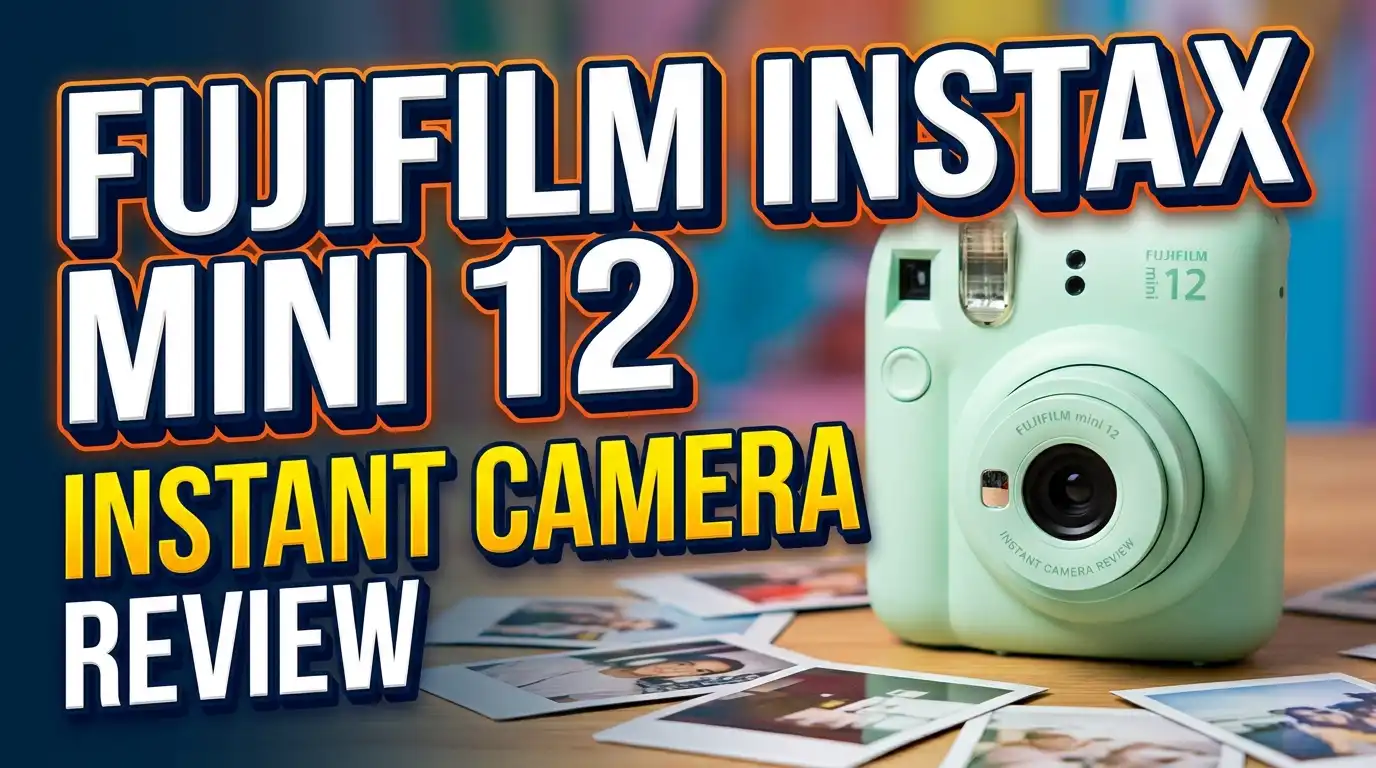
The Fujifilm Instax Mini 12 has a rounded, bubble shaped body that feels playful and modern. It measures 104mm x 66.6mm x 122mm and weighs just 306 grams without batteries. You can carry it in a small bag or even a large coat pocket.
Fujifilm offers this camera in five pastel colors: Blossom Pink, Clay White, Lilac Purple, Pastel Blue, and Mint Green. Each color has a smooth matte finish that looks great in photos. The aesthetic clearly targets a younger audience, but the colors are subtle enough for anyone to enjoy.
The body is plastic, and it feels like plastic. Nobody will mistake this for a premium device. However, the build is surprisingly solid. The lens mechanism clicks into place with confidence. The battery door and film compartment close securely. After months of use, nothing feels loose or worn.
The small selfie mirror on the front of the lens helps you frame self portraits. It is a simple addition, but it works well for quick selfies and group shots.
How to Set Up the Fujifilm Instax Mini 12
Setting up this camera takes about 60 seconds. Open the battery compartment on the side and insert two AA alkaline batteries. The camera ships with trial batteries, but you should replace them with fresh ones for best results.
Next, open the back cover and load a pack of Instax Mini film. Match the yellow arrow on the film pack with the yellow mark inside the camera. Close the back cover firmly until it clicks. Press the shutter button once to eject the protective film cover.
Twist the lens barrel to power on the camera. The lens extends outward, and a small light near the viewfinder tells you the camera is ready. That is it. There are no menus, no settings screens, and no apps to download. You point, you shoot, and a photo slides out from the top of the camera.
The entire setup process is simple enough for a child to complete. This makes the Instax Mini 12 a great gift for kids, teens, and anyone who wants zero friction between them and a printed photo.
Fujifilm Instax Mini 12: Lens and Shooting Modes
The Instax Mini 12 has a 60mm f/12.7 lens with two components and two elements. This is a fixed focal length lens with no zoom. The shooting range starts at 0.5 meters in standard mode. In close up mode, the minimum focusing distance drops to 0.3 meters.
The camera offers two shooting modes. Standard mode is the default and works for most subjects at normal distances. Close up mode activates with an extra twist of the lens barrel. This mode includes parallax correction, so your close up subjects stay centered in the frame.
Shutter speeds range from 1/2 second to 1/250 second. The camera picks the shutter speed automatically based on available light. You have no manual control over any exposure settings. This is a point and shoot camera in the truest sense.
The auto exposure system measures ambient light and adjusts accordingly. Fujifilm improved this system compared to the Mini 11. In our testing, most outdoor and indoor shots came out well exposed. The camera handles mixed lighting better than its predecessor.
Top 3 Alternatives for Fujifilm Instax Mini 12
Fujifilm Instax Mini 99 offers manual creative controls, six color effects, brightness adjustment, and double exposure mode. It still uses Instax Mini film, so your running costs stay the same. This is the best upgrade if you want more creative freedom with instant photos.

- Premium analog instant camera with matte black finish
- Use Landscape and Macro Mode to take sharp images, both from a distance and close up
Fujifilm Instax Mini Evo is a hybrid instant camera with a 2.7 inch LCD screen. It stores digital copies of every photo. You choose which ones to print. This saves film because you only print the shots you like. It has 10 lens effects and 10 film effects built in.

- Hybrid instant film camera
- 10 Lens x 10 Film Effect Options = 100 Ways of Expression
Polaroid Go Gen 2 is the smallest analog instant camera available. It uses Polaroid Go film, which produces tiny square prints. The camera features double exposure mode and a self timer. It is a great pick if you love the classic Polaroid square format in a pocket sized body.

- Wearable and take anywhere-able: As the Polaroid’s smallest instant camera, the Polaroid Go fits in almost every bag,...
- Takes clearer, brighter, even nicer pictures: Thanks to the large aperture range, precise light sensor and...
Fujifilm Instax Mini 12: Image Quality
The Instax Mini 12 produces warm, slightly soft images with noticeable contrast. Colors lean toward pastel tones. Skin tones usually appear flattering, especially in indoor settings where the flash provides consistent illumination.
Sharpness is acceptable but not remarkable. Fine details tend to blur, especially at the edges of the frame. This is expected from a simple two element lens at this price point. The soft look is part of the charm that instant camera fans love.
The auto exposure system performed well in most of our tests. Outdoor shots in daylight looked balanced and bright. Indoor party shots with mixed lighting also turned out solid. The flash filled in shadows without creating harsh highlights in most cases.
We did notice some inconsistency in tricky lighting. A portrait in bright evening sunlight overexposed skin tones noticeably. Some close up indoor shots came out darker than expected. These issues are minor and happen with all cameras at this price level.
Flash Performance and Low Light Shooting
The Instax Mini 12 has a constant firing flash that activates on every shot. You cannot disable it. The flash has an effective range of 0.3 to 2.2 meters. It recycles in about 7 seconds after each shot.
In low light, the flash is a lifesaver. Party photos, evening gatherings, and indoor portraits all benefit from the automatic flash. The camera uses slow synchro flash in dark conditions, which lets in more ambient light while still illuminating your subject.
In bright daylight, the flash acts as fill light. It softens shadows on faces and adds a catch light to eyes. This actually produces better portraits than you might expect from a budget instant camera.
The downside is obvious. You cannot turn it off. If you want moody, ambient light photos without flash, the Instax Mini 12 cannot deliver that. This is the camera’s most common complaint. The Instax Mini 99 solves this problem by offering flash control.
Fujifilm Instax Mini 12: Film Cost and Ongoing Expenses
The camera body costs around $68 to $80 depending on the retailer and color. But the real ongoing expense is the film. Each Instax Mini film pack contains 10 shots. A twin pack of 20 shots costs roughly $14 to $16.
That breaks down to approximately $0.70 to $0.80 per photo. This adds up quickly if you shoot frequently. A weekend trip where you take 40 photos will cost around $28 to $32 in film alone. You need to factor this into your buying decision.
Fujifilm also sells value packs of 60 shots, which bring the per photo cost down slightly. Buying in bulk is the smartest way to save money on film. Third party Instax Mini compatible film exists, but quality varies and most users prefer the official Fujifilm product.
The two AA batteries that power the camera are inexpensive and last roughly 100 shots. Battery cost is negligible. The camera body itself has no other consumable parts. Film is your only significant recurring expense.
Selfie Mode and Close Up Photography
The Instax Mini 12 takes better selfies than you might expect. Twist the lens barrel past the power on position to activate close up mode. The minimum focusing distance drops to 0.3 meters. The camera also applies parallax correction to keep your subject centered.
The small selfie mirror on the front of the lens lets you see your reflection. It is not large, but it gives you enough of a preview to frame your face and shoulders properly. Group selfies with two or three people work well too.
In our testing, close up mode produced consistently sharp results at arm’s length. The flash provides even illumination at close range. Skin tones look flattering and natural in most selfie conditions.
Close up mode also works for photographing small objects like flowers, food, or handwritten notes. The 0.3 meter minimum distance is close enough for interesting detail shots. This adds creative variety beyond standard portraits and group photos.
Fujifilm Instax Mini 12: Battery Life
Battery life on the Instax Mini 12 is excellent and reliable. The camera uses two standard AA alkaline batteries. Fujifilm rates battery capacity at approximately 100 shots, or 10 full film packs.
In our real world use, we got close to that estimate. After shooting through 8 film packs (80 photos), the batteries still had life left. The camera auto powers off after 5 minutes of inactivity to conserve energy.
Rechargeable AA batteries work with this camera, but Fujifilm recommends alkaline for best performance. Manganese batteries are not compatible. A pack of quality alkaline AA batteries costs a few dollars and lasts for weeks of casual shooting.
You will never worry about battery life with this camera. You will run out of film many times over before the batteries give out. This is a significant advantage over rechargeable instant cameras that need USB charging between sessions.
Who Should Buy the Fujifilm Instax Mini 12?
This camera is perfect for beginners and casual photographers who want printed photos without any learning curve. There are no settings to adjust. You just point and shoot. A photo appears 90 seconds later.
It is an excellent gift for teenagers and young adults. The pastel colors and fun design appeal to this age group. Social media users love sharing Instax prints in their posts and stories. The physical print adds a tangible element that digital photos cannot replicate.
Party lovers and event goers will get huge value from this camera. Wedding receptions, birthday parties, holiday gatherings, and vacations are all ideal use cases. Guests can take photos and keep them as instant souvenirs.
This camera is not ideal for serious photographers who want manual control. It is not built for professional use. If you want creative effects, adjustable exposure, or flash control, look at the Instax Mini 99 or Instax Mini Evo instead.
Fujifilm Instax Mini 12 vs Instax Mini 11: What Changed?
The Instax Mini 12 replaced the Mini 11 in 2023. Several improvements make the upgrade worthwhile. The new twist to open lens mechanism replaces the old push button design. It feels smoother and more satisfying to use.
Fujifilm improved the auto exposure system for more consistent results. The Mini 12 handles mixed lighting better than the Mini 11. Fewer shots come out over or underexposed compared to the previous model.
The body is slightly smaller and lighter with a more refined bubble shape. The color options are different too, with the Mini 12 offering a fresh set of pastel shades. The selfie mirror and close up mode return from the Mini 11 with improved parallax correction.
Film compatibility stays the same. Both cameras use Instax Mini film. Accessories like cases and straps are not always interchangeable due to the slightly different dimensions.
If you own a Mini 11, the upgrade is nice but not essential. If you are buying your first instant camera, the Mini 12 is the clear choice.
Fujifilm Instax Mini 12: Pros and Cons Summary
- Compact and cute design. Easily twist the lens to turn on and off
- Built-in selfie mirror for easy selfies Close-up mode with parallax correction
The pros are clear. The Instax Mini 12 costs very little. It is extremely easy to use. The auto exposure system works well. Battery life is great. The design is fun and available in attractive colors. Photo prints develop in 90 seconds and have a charming retro quality.
The cons are few but notable. You cannot disable the flash. Image quality has soft focus and limited sharpness. The ongoing film cost adds up over time. There are no manual controls of any kind. The camera body feels plasticky, which matches its price but may disappoint some buyers.
For the price, the pros far outweigh the cons. This camera delivers exactly what it promises. It gives you instant physical photo prints with zero effort and maximum fun. The flash limitation is the only real frustration, and even that produces acceptable results in most situations.
The Instax Mini 12 remains one of the best selling instant cameras in 2026 for good reason. It strikes the right balance between affordability, simplicity, and enjoyment.
Where to Buy the Fujifilm Instax Mini 12 in 2026
The Instax Mini 12 is widely available from Amazon, Best Buy, Target, Walmart, and the official Fujifilm store. Prices hover between $68 and $80 for the camera body alone. Bundle deals that include film packs and a carrying case often appear at slightly higher prices.
Amazon frequently offers the best deals, especially during sales events. Check for bundle options that include 20 or 40 shots of film, as these provide better overall value than buying the camera and film separately.
Color availability can vary by retailer. If you want a specific pastel shade, check multiple stores. Some colors sell out faster than others, especially during holiday shopping seasons.
Used and refurbished units are also available at lower prices. However, since the camera is already so affordable new, buying used saves only a few dollars. The peace of mind from a new camera with a full warranty is usually worth the small price difference.
Final Verdict: Should You Buy the Fujifilm Instax Mini 12 in 2026?
Yes. The Fujifilm Instax Mini 12 remains the best entry level instant camera you can buy in 2026. It is affordable, simple, reliable, and genuinely fun. The photo quality has a charming analog character that digital cameras cannot replicate.
If you want a camera that prints real photos with zero learning curve, this is your best option. The joy of watching a physical print develop in your hands never gets old. Whether you buy it for yourself, as a gift, or as a party camera, the Instax Mini 12 delivers consistent value.
The only reason to skip it is if you need manual controls or flash options. In that case, spend more on the Instax Mini 99. For everyone else, the Instax Mini 12 is a winner that earns our strong recommendation.
Frequently Asked Questions
Does the Fujifilm Instax Mini 12 need an app or phone connection?
No. The Instax Mini 12 is a fully standalone analog camera. It does not connect to a phone or app. You load film, take a photo, and the print ejects from the camera automatically. There is no Bluetooth, Wi-Fi, or digital storage of any kind.
How many photos can the Instax Mini 12 take on one set of batteries?
The camera runs on two AA alkaline batteries and delivers approximately 100 shots per set. That equals 10 full film packs. Battery life is one of the camera’s strongest features and will rarely cause any concern during normal use.
What size prints does the Instax Mini 12 produce?
The camera produces prints that measure 2.1 x 3.4 inches (54mm x 86mm) overall. The actual image area is 1.8 x 2.4 inches (46mm x 62mm). These are credit card sized prints that fit easily into wallets, scrapbooks, and photo frames.
Can you use the Instax Mini 12 in the dark?
Yes. The built in flash fires on every shot and has an effective range of 0.3 to 2.2 meters. The camera also uses slow synchro in low light to balance flash with ambient light. Indoor and nighttime photos turn out well in most situations.
Is the Instax Mini 12 film expensive?
Each pack of 10 Instax Mini shots costs about $7 to $8. A twin pack of 20 shots costs around $14 to $16. That works out to roughly $0.70 to $0.80 per photo. Buying larger value packs reduces the cost per shot slightly. Film is the primary ongoing expense with this camera.
Is the Fujifilm Instax Mini 12 good for kids?
Absolutely. The camera is light, easy to hold, and has no complicated settings. Kids can twist the lens to turn it on and press one button to take a photo. The instant print adds excitement for young users. It is suitable for children ages 5 and up with some supervision.

Hi, I’m Emma! I’m that friend who always gets asked “Should I buy this gadget?” – and I love it. After years of being the unofficial tech advisor for family, friends, and coworkers, I realized I had a knack for cutting through marketing hype to find what actually works.
Last update on 2026-04-01 / Affiliate links / Images from Amazon Product Advertising API