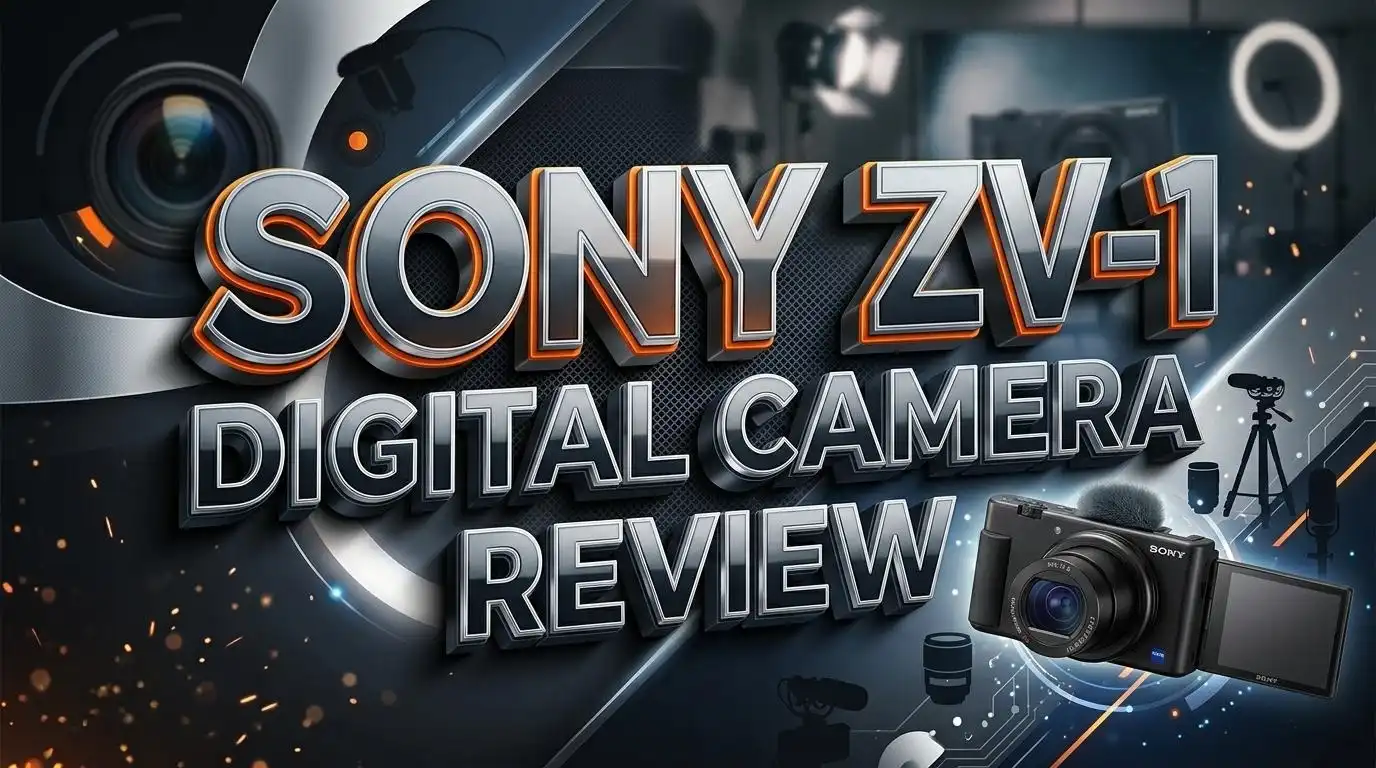
Sony ZV-1 Digital Camera Review 2026: Still Worth Every Penny?
The Sony ZV-1 has been a favorite among vloggers and content creators since its launch in 2020. But does it still hold up in 2026?
With new compact cameras hitting the market every few months, you might wonder if this pocket-sized powerhouse deserves your hard-earned money.
This review dives deep into everything the Sony ZV-1 offers. We cover its 20.1MP sensor, 4K video recording, autofocus system, battery life, and much more.
Whether you are a beginner YouTuber, a travel vlogger, or a seasoned creator looking for a reliable backup camera, this review will help you make a smart decision. Keep reading to find out if the Sony ZV-1 earns a spot in your gear bag in 2026.
Key Takeaways
- The Sony ZV-1 packs a 20.1MP 1-inch Exmor RS CMOS sensor with DRAM chip, delivering sharp photos and detailed 4K HDR video in a compact body that fits in your jacket pocket.
- Real-time Eye Autofocus and face tracking make this camera extremely reliable for vlogging, solo shooting, and product reviews where you need fast, accurate subject detection.
- The built-in directional 3-capsule microphone captures clear audio and reduces background noise, so you can record quality sound without an external mic in many situations.
- Battery life remains the biggest drawback, with only about 45 minutes of continuous video recording or around 260 still shots per charge using the slim NP-BX1 battery.
- The side flip-out 3-inch LCD touchscreen makes selfie-style shooting simple and intuitive, giving you full control over framing and settings while facing the camera.
- The ZEISS Vario-Sonnar T 24-70mm equivalent lens with f/1.8-2.8 aperture* produces beautiful background bokeh and performs well in low light conditions, making it a versatile lens for various shooting scenarios.
Sony ZV-1 Digital Camera Overview

- 20.1MP stacked back illuminated 1” Exmor RS CMOS sensor w/ DRAM. Large aperture 24-70mm1 F1.8-2.8 ZEISS Vario-Sonnar T...
- Fast Hybrid Autofocus and Real Time Eye Autofocus and Real-time Autofocus tracking.
Last update on 2026-07-20 / Affiliate links / Images from Amazon Product Advertising API
The Sony ZV-1 is a compact digital camera built specifically for vloggers and content creators. Sony launched it in June 2020 as a dedicated vlogging solution. It borrows the excellent 1-inch sensor from the popular RX100 series and pairs it with creator-focused features.
This camera measures just 4.13 x 2.38 x 1.74 inches and weighs roughly 294 grams with the battery and memory card. You can slip it into a coat pocket or small bag without any hassle. The body features a clean, minimalist design with a prominent record button on top.
Sony priced the ZV-1 at $749.99 at launch. You can now find it at lower prices since Sony has technically discontinued production. However, many retailers still carry new and renewed units, making it an accessible option for creators on a budget.
20.1MP Sensor and Image Quality
The heart of the Sony ZV-1 is its 20.1-megapixel 1-inch Exmor RS CMOS sensor with a stacked DRAM chip. This sensor design allows fast readout speeds. It reduces rolling shutter distortion during video recording and supports quick burst shooting at up to 24 frames per second.
Still image quality is impressive for a compact camera. Colors appear natural and accurate. Detail remains strong across the frame. The sensor handles dynamic range well, preserving highlights and shadows in tricky lighting situations.
High ISO performance is decent up to ISO 3200. Beyond that, noise becomes more visible, especially in shadow areas. However, the large f/1.8 aperture at the wide end lets in plenty of light. This reduces the need to push ISO values too high in most indoor and low-light settings.
4K Video Recording Performance
The Sony ZV-1 records UHD 4K video at 30 frames per second with full pixel readout and no pixel binning. This means the camera uses the full width of the sensor to produce sharp, detailed footage. You also get HLG (Hybrid Log-Gamma) and S-Log2/S-Log3 gamma profiles for color grading flexibility.
Full HD recording goes up to 120fps for smooth slow-motion footage. This is a fantastic feature for creative transitions and dramatic effect shots. The camera captures rich detail in 1080p mode with minimal compression artifacts.
One concern is 4K recording overheating. Extended 4K sessions can trigger the camera’s thermal protection. Typical continuous recording in 4K lasts about 30 to 40 minutes before the camera may need a cool-down period. This is common in compact cameras of this class and sensor size.
ZEISS Lens and Bokeh Quality
The ZV-1 features a ZEISS Vario-Sonnar T lens with a 24-70mm equivalent focal range*. The maximum aperture is f/1.8 at 24mm and f/2.8 at 70mm. This is a bright and versatile zoom lens for a camera of this size.
Background bokeh looks smooth and pleasing, especially at the wide end where the f/1.8 aperture creates a shallow depth of field. Sony also included a dedicated Background Defocus button on top of the camera.
One press toggles between a blurred background and a sharp background. This makes switching between talking-head shots and wider environmental scenes effortless.
The ZEISS T* coating reduces lens flare and ghosting. Optical SteadyShot image stabilization is built into the lens. It helps smooth out handheld shooting and compensates for minor camera shake during video recording and still photography.
Top 3 Alternatives for Sony ZV-1
Sony ZV-1 II is the direct successor with a wider 18-50mm equivalent lens. It is a great pick if you do a lot of arm’s-length vlogging and want a wider field of view. The newer model also adds Bluetooth connectivity and an improved cinematic vlog setting.

- Ultra-wide 18-50mm1 zoom lens gets it all in the frame
- Large 1.0-type sensor for professional results even in low-light

Last update on 2026-07-20 / Affiliate links / Images from Amazon Product Advertising API
Canon PowerShot V1 is a newer competitor with a 1.4-inch sensor and 17-52mm equivalent lens. It offers 4K 60p video, Canon’s excellent color science, and a very compact body that rivals the ZV-1 in portability.

- Great for vlogging, video, live streaming.
- Built-in 16-50mm F2.8-4.5 wide angle zoom lens (35mm equivalent).
Last update on 2026-07-20 / Affiliate links / Images from Amazon Product Advertising API
Canon PowerShot G7 X Mark III remains a classic choice with a 20.1MP 1-inch sensor and 24-100mm zoom range. It supports 4K video, has a flip-up screen, and offers reliable Canon image quality for both photos and video.

- NB-13L Battery Pack (3.6V, 1250mAh)
Last update on 2026-07-20 / Affiliate links / Images from Amazon Product Advertising API
Autofocus System and Eye Tracking
Sony equipped the ZV-1 with a Fast Hybrid Autofocus system using 315 phase-detection points. This system covers approximately 65% of the sensor area. It locks onto subjects quickly and tracks them with impressive consistency.
Real-time Eye AF is a standout feature. The camera detects and follows your eyes with remarkable precision. This keeps your face sharp during vlogging sessions, even as you move around. It works in both photo and video modes.
The Product Showcase setting is another smart addition. It shifts focus from your face to an object you hold in front of the camera. This happens automatically and smoothly. It is perfect for product reviews, unboxing videos, and tutorials where you need to show items to the camera.
Built-In Microphone and Audio Quality
One of the features that sets the ZV-1 apart from regular compact cameras is its built-in 3-capsule directional microphone. This mic sits on top of the camera body and captures clear, forward-facing audio. It does a good job of isolating your voice from ambient noise.
Sony includes a furry windscreen in the box. This small accessory reduces wind noise during outdoor recording. It attaches easily to the hot shoe area and makes a noticeable difference in windy conditions.
The camera also has a 3.5mm microphone input. You can connect an external microphone like the Sony ECM-W2BT or a Rode VideoMicro for even better audio quality. However, there is no headphone jack for real-time audio monitoring. This remains a missing feature that some creators wish Sony had included.
Flip Screen and Touchscreen Controls
The Sony ZV-1 has a 3.0-inch side-opening vari-angle LCD touchscreen with 921,600 dots of resolution. The screen flips out to the side and rotates 180 degrees. This lets you see yourself clearly while filming from the front.
Touch focus and touch shutter functions work responsively on this screen. You can tap anywhere on the display to set your focus point. Drag focus tracking is also available. You simply drag your finger across the screen to move the focus area during recording.
The screen brightness is adequate for indoor use. Outdoor visibility suffers under direct sunlight, which is a common issue with LCD screens in this price range. A screen shade or slight angle adjustment usually helps manage this limitation.
Battery Life and Charging
Battery life is the Sony ZV-1’s most discussed weakness. The camera uses the compact NP-BX1 lithium-ion battery. Sony rates it for approximately 260 still shots or about 45 minutes of continuous video recording per charge.
In real-world use, many creators report even shorter battery life during 4K recording sessions. Frequent use of the LCD screen, Wi-Fi, and autofocus drains the battery faster. Planning extra batteries for extended shoots is a must.
The camera charges through its Micro USB port, not USB-C. This feels outdated in 2026. However, you can power the camera through USB while shooting. This means you can use a portable power bank for longer recording sessions. Carrying two or three spare NP-BX1 batteries is the best practice for a full day of content creation.
Connectivity and Streaming Features
The ZV-1 offers Wi-Fi and NFC connectivity for quick file transfers and remote control. You can pair it with the Sony Imaging Edge Mobile app on your smartphone. This app allows remote shooting, image transfer, and basic editing on the go.
Live streaming capability is a major bonus. The ZV-1 can function as a high-quality webcam when connected to a computer via USB. This makes it excellent for Zoom calls, live Twitch streams, and YouTube live sessions. The image quality far exceeds any built-in laptop webcam.
The camera also has a Micro HDMI output for connecting to external monitors or capture cards. This is useful for creators who want to record clean video output through a dedicated recording device. HDMI output supports 4K resolution, giving you maximum flexibility for your streaming and recording setup.
Sony ZV-1 for Travel Photography
The compact size of the ZV-1 makes it an excellent travel companion. Its 24-70mm equivalent zoom range covers wide-angle landscapes and tighter portrait-style shots. You can shoot street photography, food photography, and scenic views with a single camera that fits in your hand.
Optical image stabilization helps capture sharp handheld shots in dim museums, restaurants, and evening street scenes. The fast f/1.8 aperture at the wide end adds to its low-light ability. Auto white balance performs reliably across different lighting conditions.
The camera’s intelligent auto mode is useful for quick snapshots when you do not want to fiddle with manual settings. It identifies scene types and adjusts exposure, color, and focus automatically. For more control, aperture priority and full manual modes are available.
Who Should Buy the Sony ZV-1 in 2026?
The Sony ZV-1 remains a solid choice for beginner to intermediate content creators who want a compact, all-in-one camera. It suits vloggers, YouTubers, social media creators, and anyone who values portability with quality video and photo output.
If you shoot mostly talking-head videos, product reviews, or travel vlogs, this camera delivers. The combination of great autofocus, built-in microphone, and flip screen addresses the core needs of solo content creators without requiring extra accessories.
However, if you need extended recording time, professional-grade battery life, or interchangeable lenses, you should look at the Sony ZV-E10 II or similar mirrorless cameras. The ZV-1 is best for creators who prioritize compact size and ease of use over maximum versatility.
Sony ZV-1 Pros and Cons
The strengths of the Sony ZV-1 are clear. It produces excellent 4K video with rich detail. The autofocus system is fast and reliable. The built-in microphone sounds surprisingly good. Background defocus works beautifully. The compact body goes anywhere without weighing you down.
The weaknesses deserve honest attention too. Battery life is short. The Micro USB port is outdated. The camera can overheat during long 4K recordings. There is no headphone jack for audio monitoring. The screen can be hard to read in bright sunlight.
Overall, the pros outweigh the cons for most content creators. The ZV-1 does its core job extremely well. It captures high-quality video and photos in a body that encourages you to shoot more. That alone makes it a valuable tool for creators who prioritize consistency and convenience.
How the Sony ZV-1 Compares to the ZV-1 II
The Sony ZV-1 II launched in 2023 as the updated version. The biggest change is the lens. The ZV-1 II uses an 18-50mm equivalent wide-angle zoom instead of the original 24-70mm range. This wider field of view benefits arm’s-length vlogging significantly.
However, the original ZV-1 has some advantages. Its 24-70mm lens offers a longer zoom reach. It has built-in optical image stabilization, which the ZV-1 II replaced with electronic stabilization only. The original also retains a built-in flash, which the ZV-1 II dropped.
Pricing favors the original ZV-1 since it is now available at lower prices due to being discontinued. If you value zoom range, optical stabilization, and a lower price, the original ZV-1 may actually be the better pick in 2026. The ZV-1 II wins if you need that ultra-wide vlogging angle.
Final Verdict: Is the Sony ZV-1 Worth It in 2026?
- 20.1MP stacked back illuminated 1” Exmor RS CMOS sensor w/ DRAM. Large aperture 24-70mm1 F1.8-2.8 ZEISS Vario-Sonnar T...
- Fast Hybrid Autofocus and Real Time Eye Autofocus and Real-time Autofocus tracking.
Last update on 2026-07-20 / Affiliate links / Images from Amazon Product Advertising API
The Sony ZV-1 remains a strong contender in 2026 for anyone who needs a compact, capable vlogging camera. Its image quality, autofocus performance, and creator-focused features still hold up well against newer competitors. The price has dropped from its original $749 to more affordable levels, making it an even better value.
The camera is not perfect. Battery life, overheating, and the old Micro USB port are real drawbacks. But these issues are manageable with a few spare batteries and a power bank. For the price you pay, the Sony ZV-1 delivers exceptional quality in a tiny package.
If you are starting your content creation journey or need a reliable compact camera for daily vlogging, the Sony ZV-1 earns a strong recommendation. It proves that a great camera does not need to be big, heavy, or expensive to produce professional-looking content.
Frequently Asked Questions
Is the Sony ZV-1 still a good camera in 2026?
Yes, the Sony ZV-1 remains a very capable compact camera in 2026. Its 20.1MP sensor, 4K video, fast autofocus, and built-in microphone still perform at a high level. The lower price point now makes it an even better value for beginner and intermediate creators.
How long can the Sony ZV-1 record video continuously?
The Sony ZV-1 records approximately 45 minutes of continuous video on a full battery charge. In 4K mode, thermal protection may limit recording to about 30 to 40 minutes. Using USB power delivery extends recording time significantly.
Does the Sony ZV-1 have image stabilization?
Yes, the Sony ZV-1 has built-in Optical SteadyShot image stabilization in the ZEISS lens. This helps reduce camera shake during handheld video recording and still photography. It is effective for walking shots and general handheld use.
Can I use the Sony ZV-1 as a webcam?
Absolutely. The Sony ZV-1 works as a USB webcam when connected to a computer. You do not need any additional capture card or software. Simply connect it via USB and select the webcam mode. The video quality is far superior to standard laptop webcams.
What memory card does the Sony ZV-1 use?
The Sony ZV-1 uses standard SD, SDHC, or SDXC memory cards. For best performance with 4K video recording, use a UHS-I U3 or faster card. A 64GB or 128GB card provides plenty of storage for long recording sessions.
Is the Sony ZV-1 good for photography or just video?
The Sony ZV-1 is excellent for both photography and video. Its 20.1MP sensor captures sharp, detailed still images. The 24-70mm zoom range and f/1.8 aperture give you creative control over depth of field and low-light photography. It performs just as well as the Sony RX100 series for still images.

Hi, I’m Emma! I’m that friend who always gets asked “Should I buy this gadget?” – and I love it. After years of being the unofficial tech advisor for family, friends, and coworkers, I realized I had a knack for cutting through marketing hype to find what actually works.